PokeBonk is a free, unofficial 3D survivor game played in a browser. Pick a partner, enter a run, and survive wild hordes while your Pokémon grows. We help you find the real game and understand the first decisions.
PokeBonk is an unofficial Pokémon fan game that brings familiar partners into a 3D survival arena. The original project credits Megabonk as an inspiration. You control your partner's movement while its moves attack automatically, making positioning and your upgrade choices central to the opening minutes.
A session starts with a partner, a region, and a game mode. Once the run begins, enemies approach as you move around the map. Your health, experience, moves, and run timer help you follow what is happening. Leveling up brings a choice of cards that can add a move, improve one you already have, or give you a vitamin.
This PokeBonk guide focuses on getting that first session right. Use the walkthrough for the actual menu sequence, compare the three initial partners below, then keep the controls and early survival advice nearby while you learn. The game itself runs on pokebonk.com; this independent site maintains the guides.
START HERE
One good first run starts before the timer.
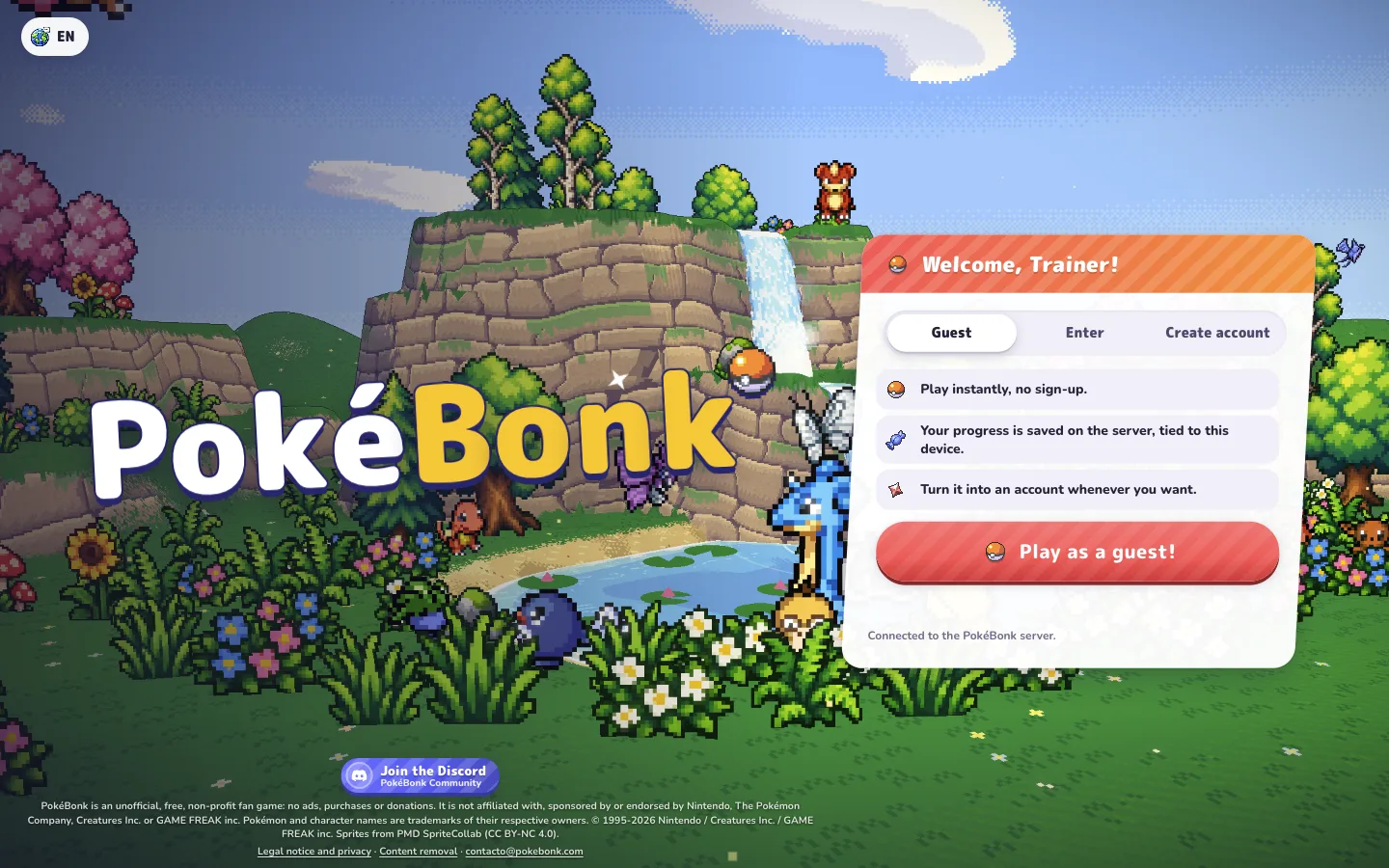
Open the Guest tab, press “Play as a guest!”, and confirm your first partner. Then open Play, select your League member, and choose an available region, mode, and difficulty. The walkthrough shows each screen in order.
Screenshots captured from pokebonk.com on October 17, 2026. Original game project led by Charcher.
Inside the original PokeBonk game
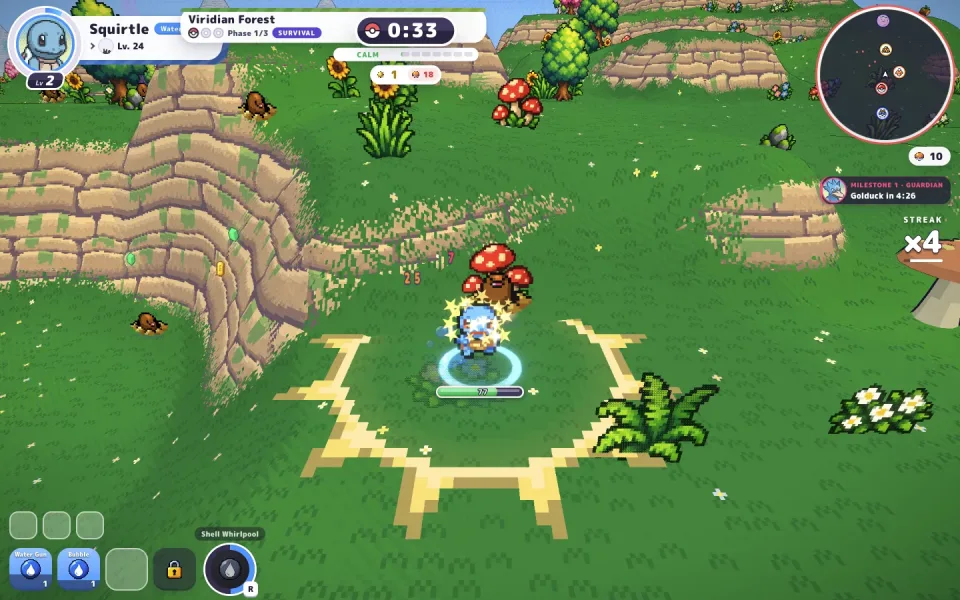
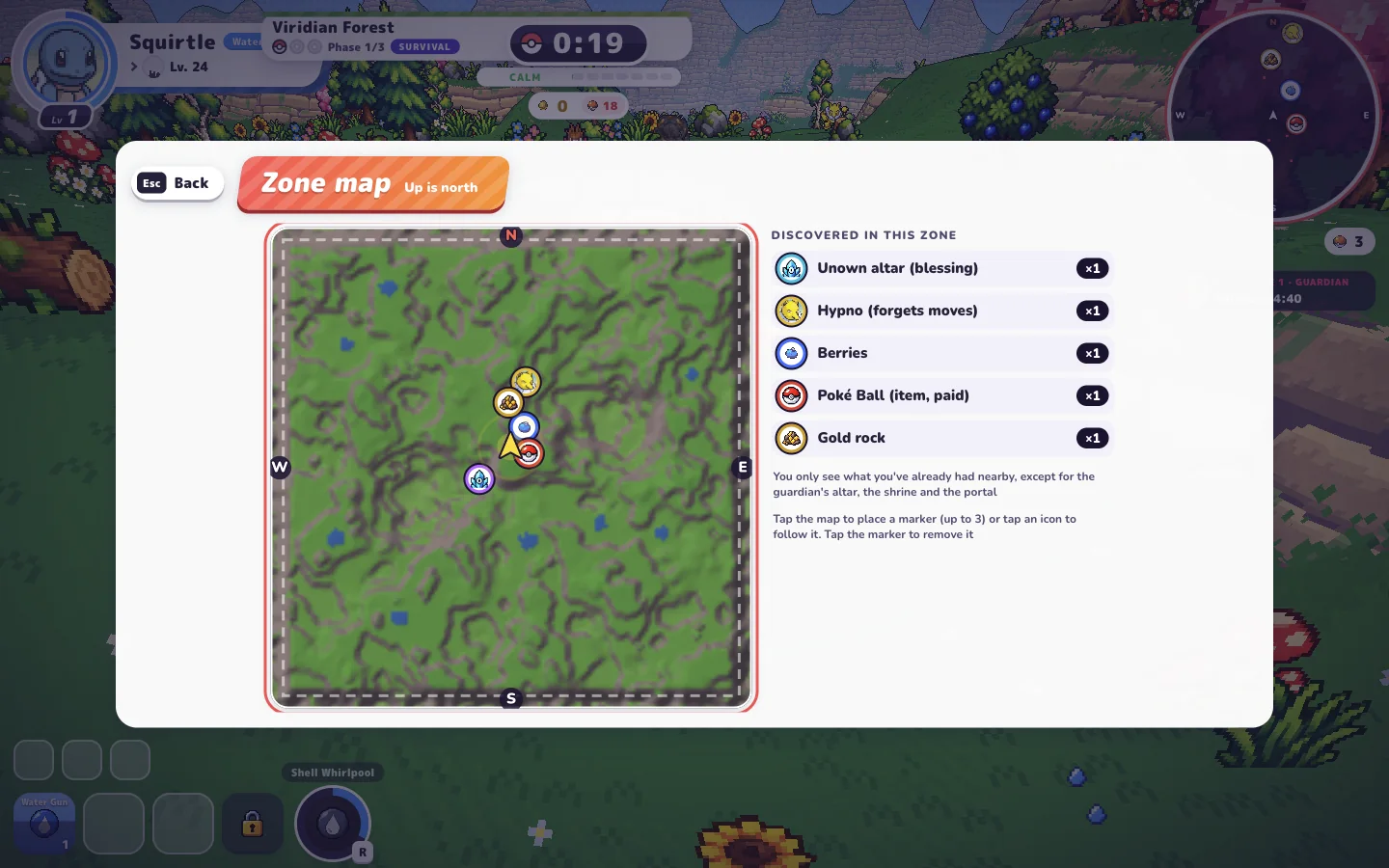
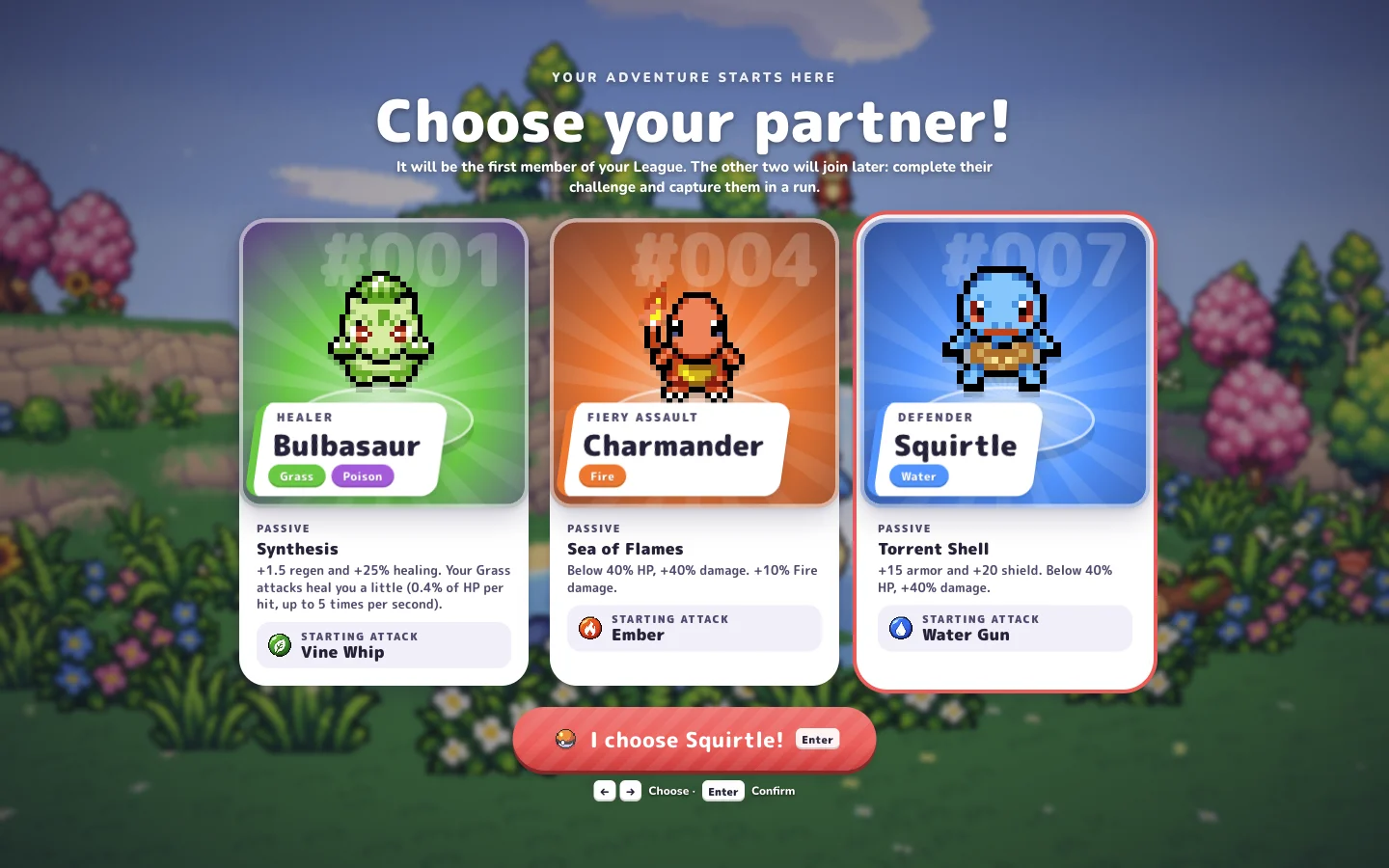
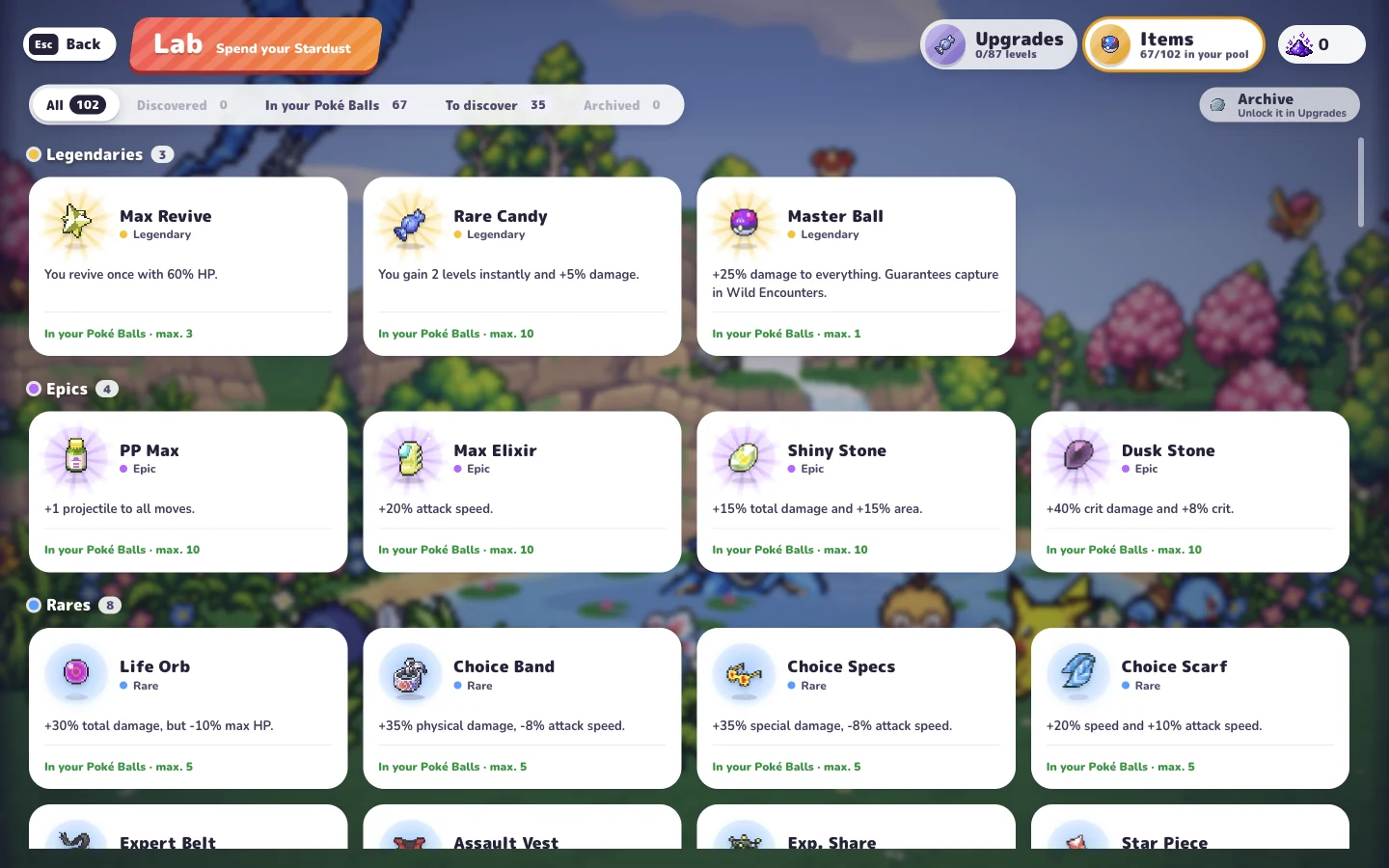
Explore the forest, check the map, choose a partner and browse the Lab. These are our own captures from pokebonk.com. Open a picture to see the full screen; each keeps its actual capture date, and older menus or balance may differ today.
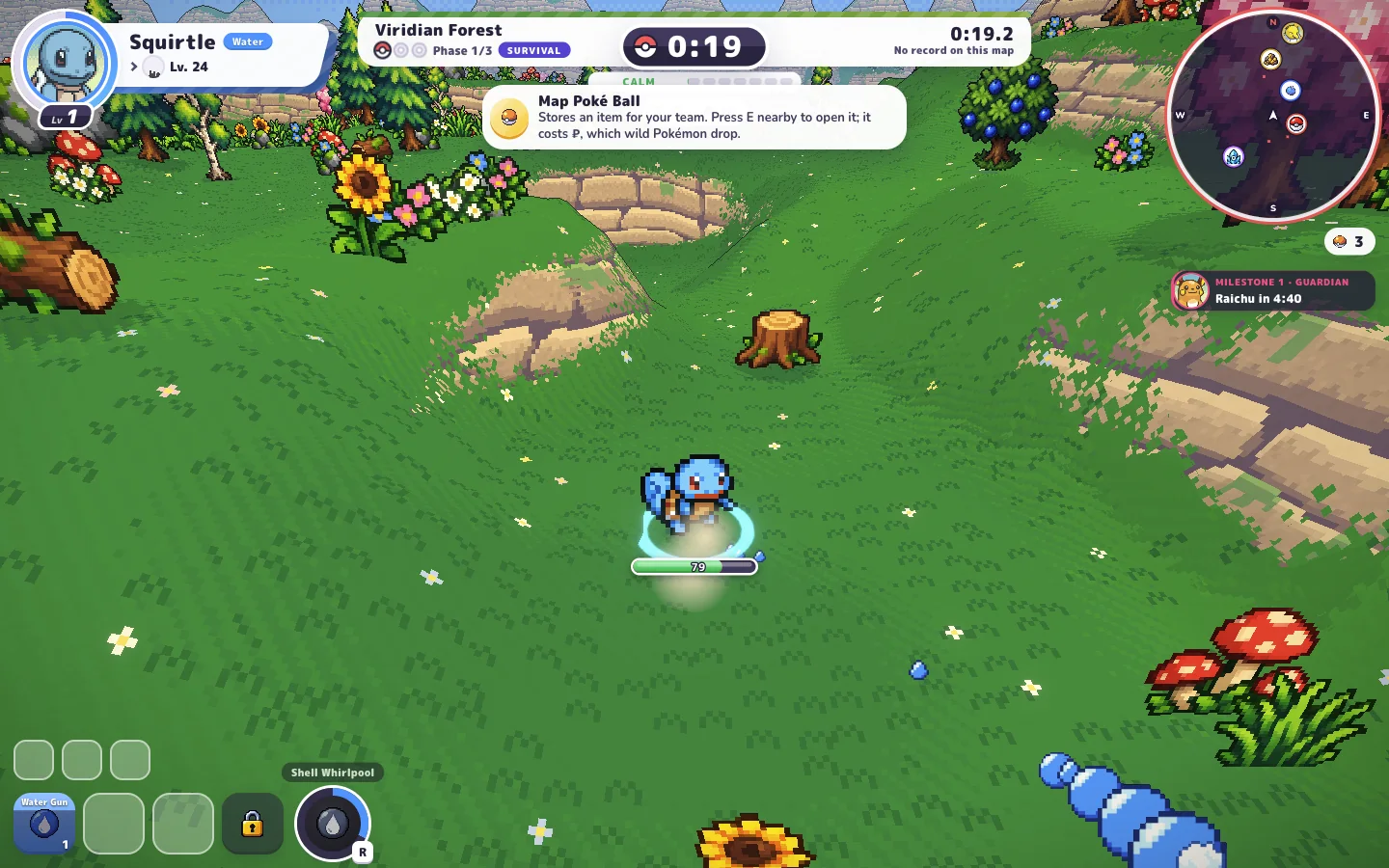
A forest Survival run with Squirtle · v0.7.3. Captured from pokebonk.com, . Game by the original project led by Charcher.The Zone map and its discovered-location legend · v0.7.3. Captured from pokebonk.com, . Game by the original project led by Charcher.The three starting partners, before the first run. Captured from pokebonk.com, . Game by the original project led by Charcher.An earlier look inside Lab → Items · v0.5.5. Captured from pokebonk.com, . Game by the original project led by Charcher.
A fresh Guest session offers three partners. The game's role labels and passives give each a different starting point. Choose a mechanic you want to learn, then try it in an early run. The comparison follows each partner's displayed kit and our early gameplay observations.
GRASS / POISON
Bulbasaur
Healer · Vine Whip
Synthesis supports regeneration and healing, including a small recovery when Grass attacks connect. Vine Whip starts the run with an arc toward the nearest enemy that can root it. This kit gives you a reason to watch recovery alongside incoming damage. Keep moving even when your health can recover.
Sea of Flames increases Fire damage and grants an additional damage bonus at low health. Ember is a projectile aimed toward the nearest enemy and can burn it. Pick Charmander to explore a Fire damage kit. Treat the low health effect as a conditional bonus while continuing to protect your health bar.
Torrent Shell adds armor and shield, with an additional damage bonus at low health. Water Gun fires toward the nearest enemy and can apply wet. Squirtle suits a first experiment with defensive passives. In our Survival playtest, its automatic Water Gun attacks carried the opening and the first level-up offered Bubble.
Based on the original partner selection and League profiles, checked October 17, 2026. The full guide includes the later moves listed in each partner's kit.
PICK A RUN
Classic and Survival explained
Two run structures, selected before you enter the map.
ZONES & OBJECTIVES
Classic
The preparation screen describes Classic through zones, guardians, and a shrine. Our run began in Zone 1/3 with a countdown timer. This gives your opening a visible zone and time context: check those indicators as you learn the map and your partner's attacks.
Choose Classic if you want to explore that zone structure. Keep the same region and difficulty when practicing with another partner, so you can compare how the opening feels with a different starting move and passive.
ENDLESS & MILESTONES
Survival
The preparation screen describes Survival as endless hordes and milestones. Our run displayed an elapsed timer, a phase, and an upcoming guardian milestone. We used this mode to observe Squirtle's first level-up and add Bubble to its moves.
Choose Survival if you want to explore the endless format. Watch the current milestone alongside your health and upgrades as the run continues. Use the elapsed time and phase to follow your progress while learning how upgrades change your moves.
Our checks used Normal difficulty in Viridian Forest. The game also lists Hard and Nightmare; those difficulty settings have not been compared here. See the mode notes.
INSIDE A RUN
How combat and leveling up work
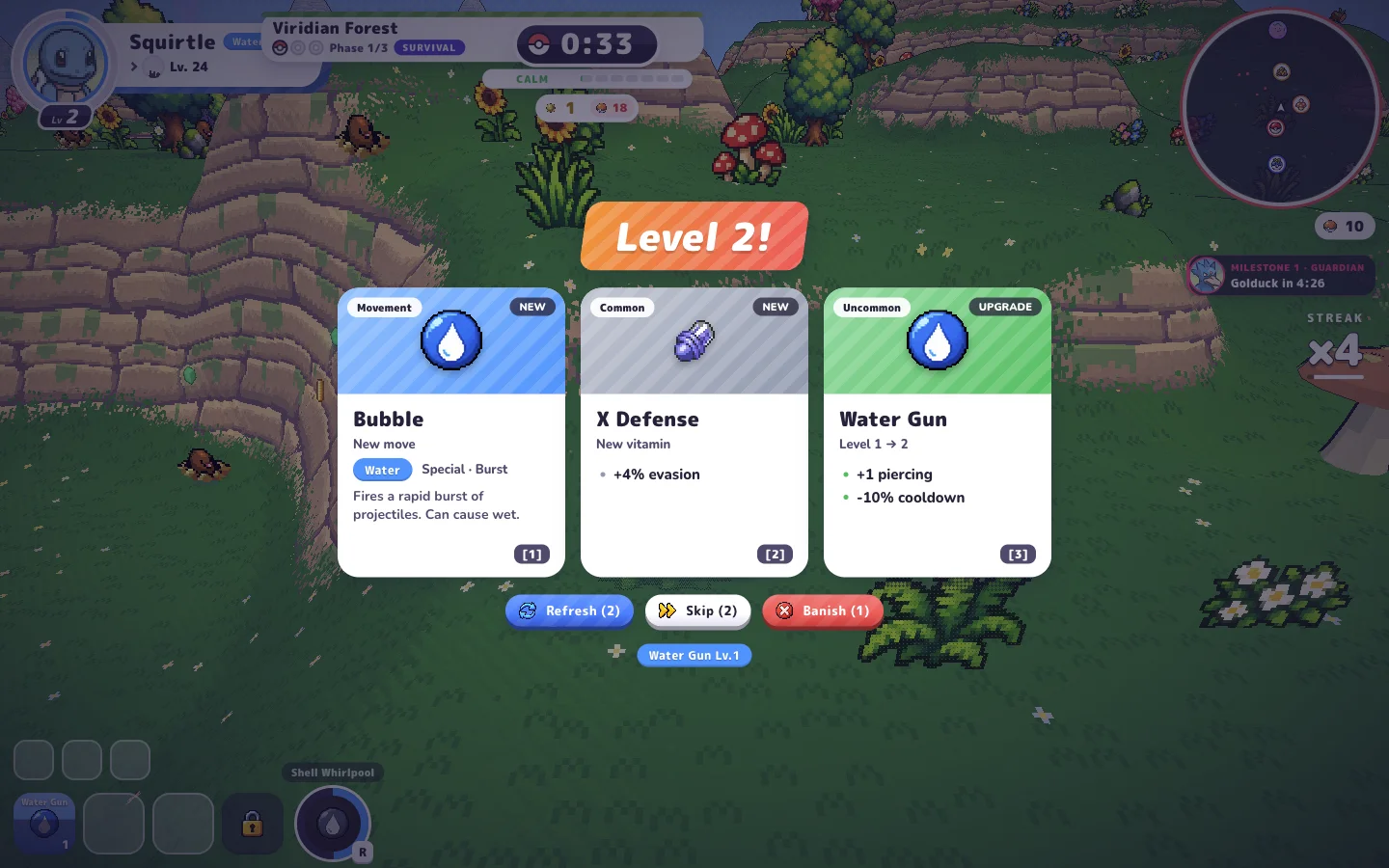
A real early upgrade, captured during our Squirtle test.
Your starting move attacks automatically. With Automatic aiming selected, the game targets the closest enemy; the Controls menu also offers Manual aiming toward the camera. This lets you spend the opening learning movement, enemy spacing, and the shape of your starting attack.
Watch the EXP display as the run develops. In our test, reaching level 2 opened three upgrade cards: Bubble as a new move, X Defense as a vitamin, and an improvement to Water Gun. Choosing Bubble added it beside Water Gun in the move bar. Future offers can vary, so read the cards you actually receive.
Compare the change each card describes with your current kit. Adding an attack, improving an existing move, and taking a vitamin are different choices. After choosing, use the pause panel to review your moves, items, and stats. Our beginner walkthrough explains this first upgrade in context.
Three different upgrade types at Squirtle's first level-up. Captured from pokebonk.com, . Game by the original project led by Charcher.
From the original game's pause help. Movement, interaction, Ultimate, and pause were used in our desktop runs. Check Settings → Controls for aiming options and Settings → Keys for your current bindings.
01
Make room before choosing a direction
Look for open space around your partner and keep an escape route in view. In our early Classic test, standing still ended the run quickly despite Bulbasaur’s healing passive. Use movement to give automatic attacks time to work, and watch whether enemies are closing the route you planned to take.
02
Use pause to understand your kit
Press Esc when you need to inspect the run. The panel shows health, experience, moves, items, and stats together. After a level-up, check what changed before making assumptions about the next upgrade. Learning one partner’s first move and passive makes the opening easier to follow.
03
Give your first session a small goal
Start by learning the entry flow, moving comfortably, and reading your first upgrade. Once those steps feel familiar, try the other mode or a different starter. Comparing one change at a time gives you a clearer sense of the game than changing your partner, mode, and difficulty together.
Read item effects and limits, compare permanent Lab upgrades, and find practical help for player questions. Use the Lab budget calculator or search the signature fusion recipes, both checked against v0.8.55 client data on October 26. Early gameplay examples retain their October 17 playtest dates; each article explains its own evidence.
New to PokeBonk? Follow the first-session checklist, learn how to read upgrade choices and find the right menu after a run. Returning players can use the Wiki’s system map, tools and version directory to check whether older advice applies to the game they opened.
Newly added: 聶寶’s October 18 tutorial on Lab priorities and item unlocks. Keep the short beginner walkthrough, edited gameplay and Spanish first look nearby too. Creator strategies are examples to compare with the Wiki, and YouTube loads only when you choose to watch.
A short tutorial on permanent upgrade priorities and item-unlock suggestions. Compare the creator’s choices with our Lab and item references; this is not a tested optimal purchase order for the current patch.
Mandarin commentary with on-screen Chinese text. YouTube captions were unavailable when checked.
A chaptered introduction to entering the game, reading a partner profile, choosing a starter, and understanding a run. Use the early chapters alongside our written walkthrough.
Mandarin original. English audio and auto-generated English captions were available on YouTube when checked.
Edited PokeBonk gameplay from CD喜德. Follow the creator’s early-game footage alongside our written guide; menus and balance may differ in the current release.
A Spanish-language introduction and gameplay session with Giovi PKMN. A useful alternative perspective on the game, rather than a step-by-step English tutorial.
Spanish commentary. Captions and translated audio depend on YouTube availability.
Yes. The original project's legal notice describes it as free and non profit.
Do I need to download it?
No. The original project's legal notice says the game is played on its website and is not distributed as a download.
Can I play as a guest?
Yes. We verified a Guest session and entered the game menu on the original site on October 17, 2026.
Is PokeBonk an official Pokémon game?
No. The original project notice describes an unofficial fan project. It is not affiliated with or endorsed by Nintendo, The Pokémon Company, Creatures, or GAME FREAK. This guide site is also independent of that project.
Which starter is best for beginners?
Start with the passive you want to learn: Bulbasaur for healing, Charmander for Fire damage, or Squirtle for armor and shield. Our starter comparison explains those differences. We have not measured win rates to establish a universal best choice.
Where can I play the original game?
Choose Play the Original Game to open pokebonk.com in a new tab. This independent guide provides walkthroughs and references; the game, accounts and progress are managed by the original project.
CREDITS & SOURCES
Follow the original project.
This is an independent guide. PokeBonk's project notice names Charcher as the project lead and describes the fan game as inspired by Megabonk. Gameplay details here are checked against the current original game.
Our October 17 checks covered the live menus, starter profiles, an early Bulbasaur Classic run, and a Squirtle Survival run through its first level-up. Earlier screenshots come from those sessions. The gallery adds a short v0.7.3 Squirtle Survival run and its Zone map, captured October 19. Longer runs, evolution conditions, capture challenges, and mobile controls need further playtesting before we publish detailed instructions. On October 18 we rechecked v0.6.2 release notes, Lab descriptions and settings, and reviewed new community questions. On October 19 we checked v0.7.3, Patch #7 map notes, the new Season 2 announcement and creator updates; these release statements do not replace the dated playtests. Tool data checked October 26, 2026 against the original v0.8.55 public client, build mvob1c8t. Lab schedules are calculated from its price functions; signature recipes are data definitions, not completed fusion tests. The tools do not connect to a game account or change progress. Earlier screenshots and gameplay checks retain their original dates.